Apps / Says Who?
Says Who?
A game for children aged 9 and up about not believing things until somebody gives you a reason, and about giving one when they refuse. In Hungarian it is Ki mondta?, and the whole game ships in both languages.
What it does
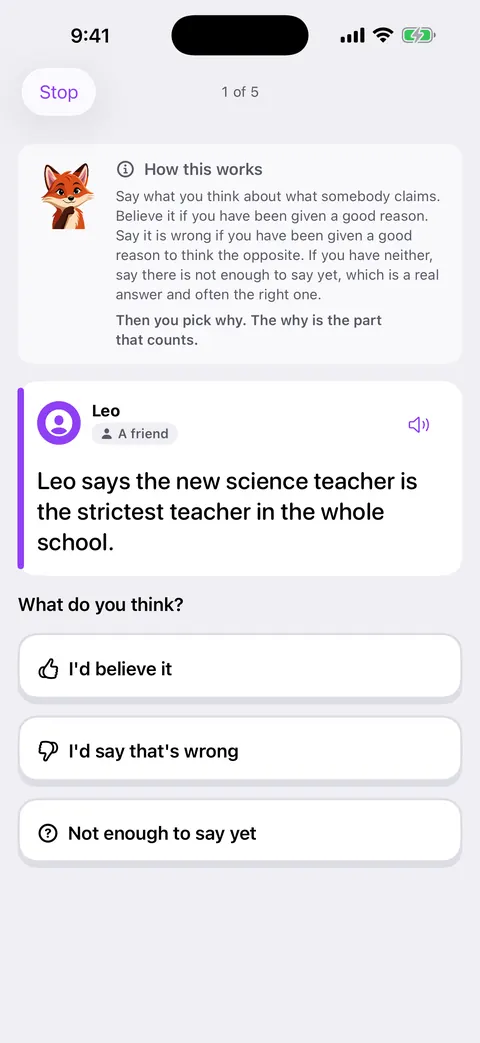
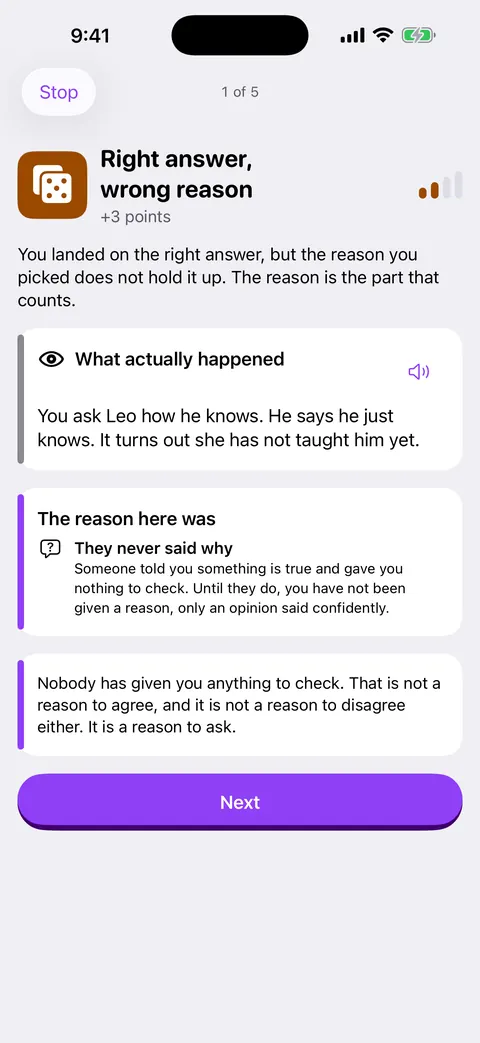
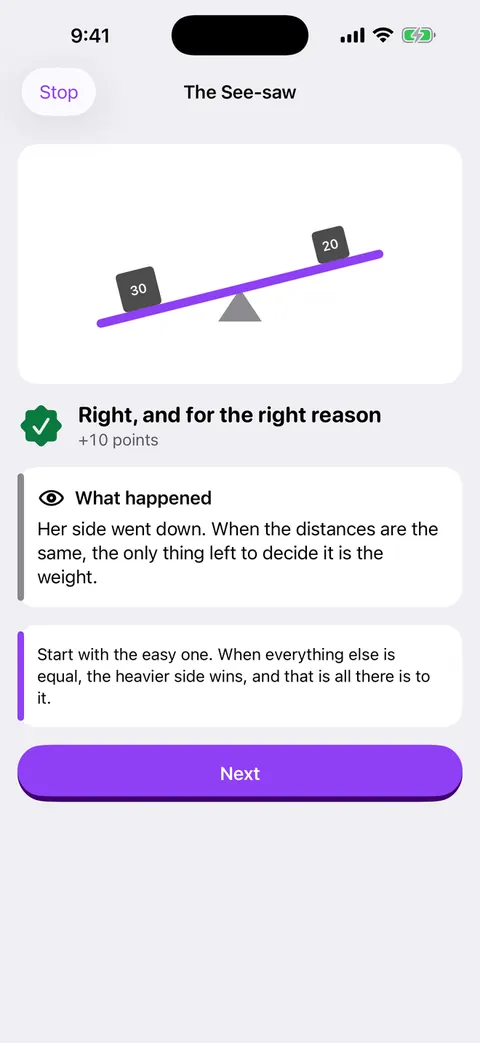
Your child reads something a person claims: an advert, a rumour going round the year, a headline with no scientist named, a friend who is certain. They decide what they think. Then, and this is the part that matters, they say why, by choosing from a hand of cards. Only then do they find out what actually happened.
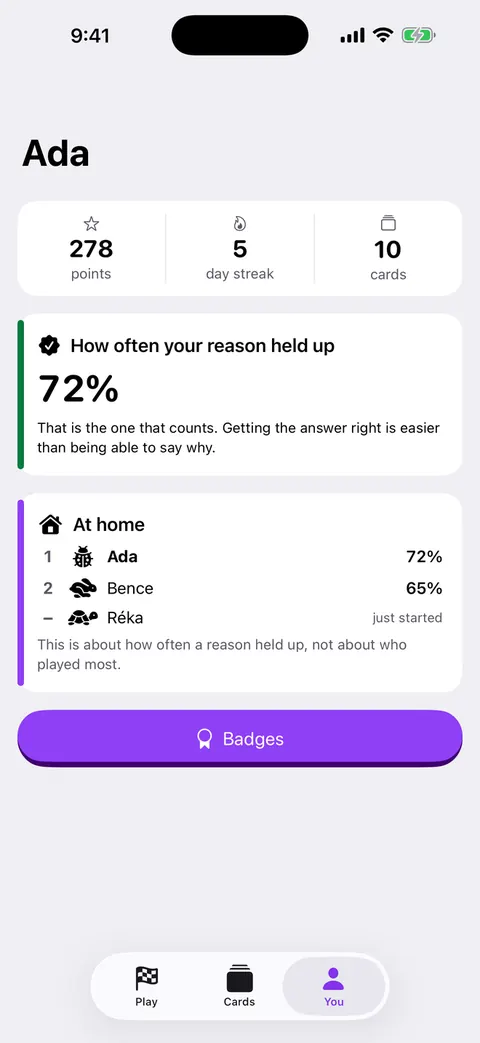
The reason scores more than the answer, on purpose and out loud. Guessing right with a poor reason is worth less than an honest mistake, and children work that out very quickly.
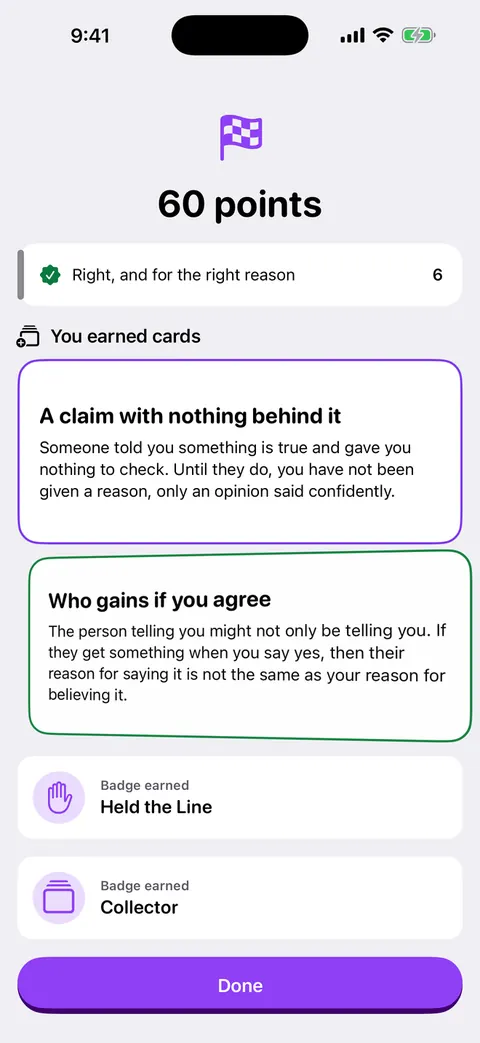
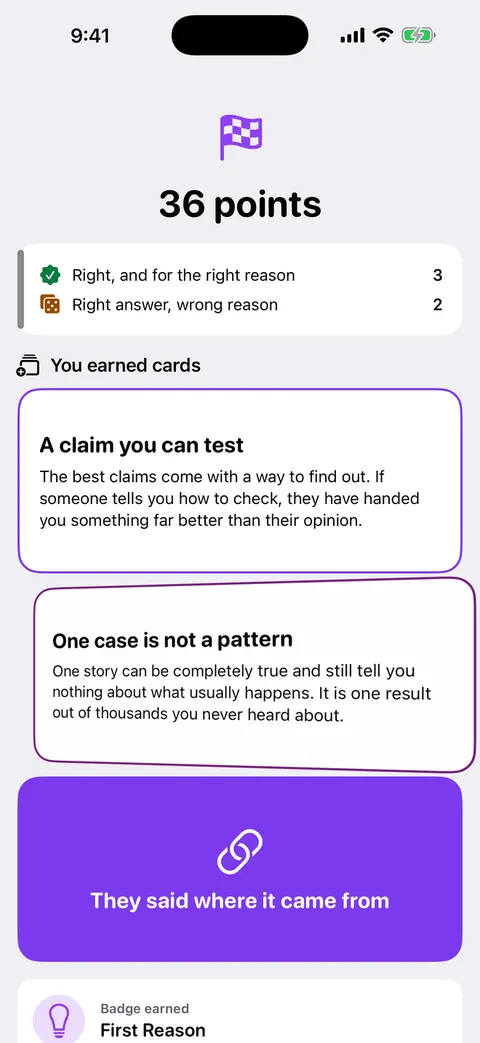
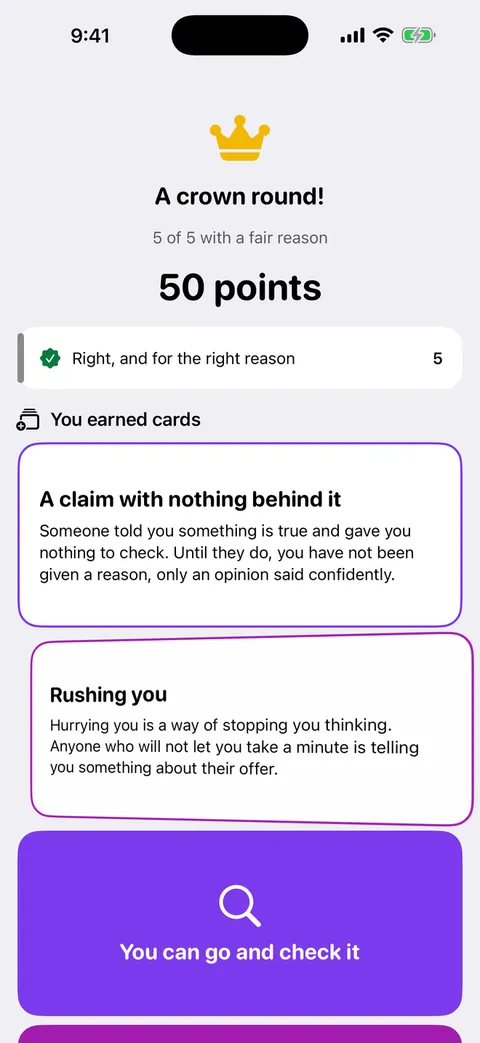
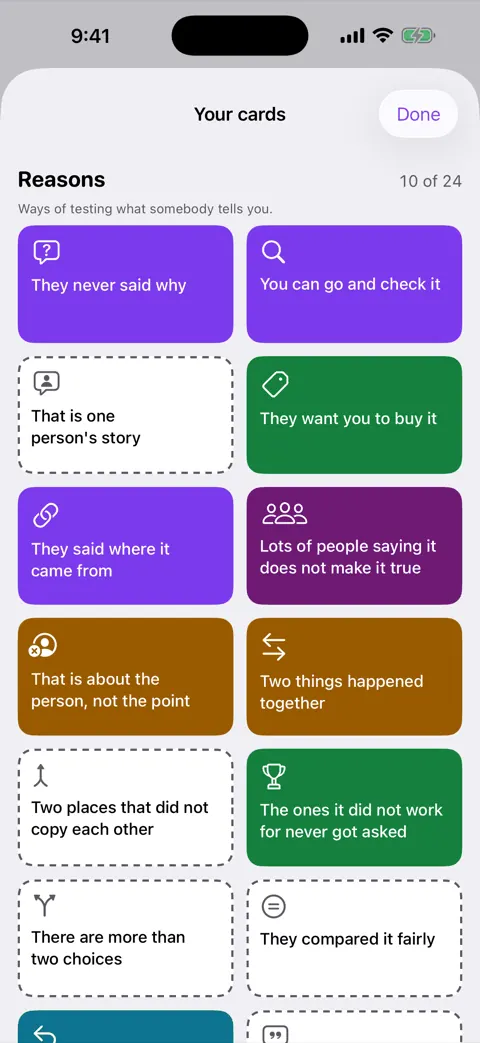
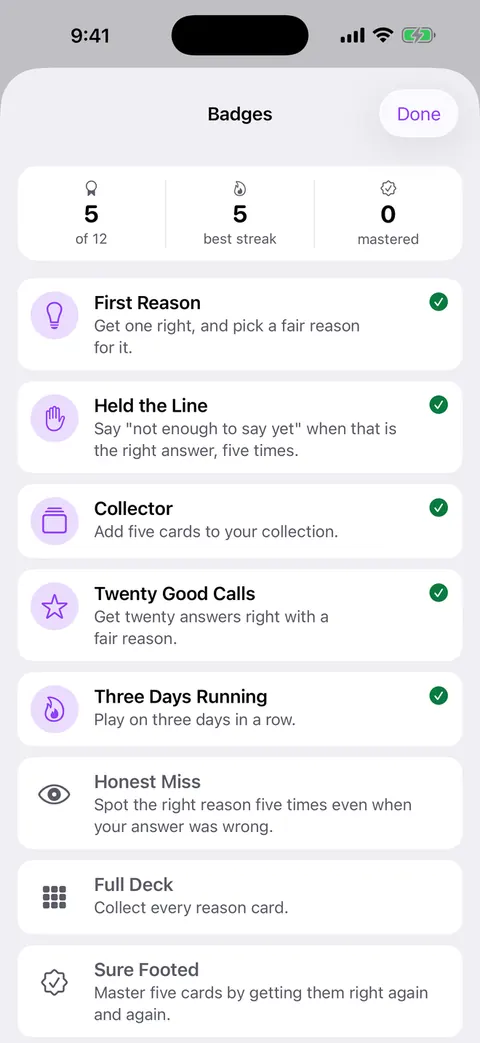
Alongside the claims: sixty five situations about saying no to pressure, with thirteen named tricks and real words to use; six experiments to predict and run; and fifty cards to earn, each carrying the grown-up name of an idea, from survivorship bias to a fair test.
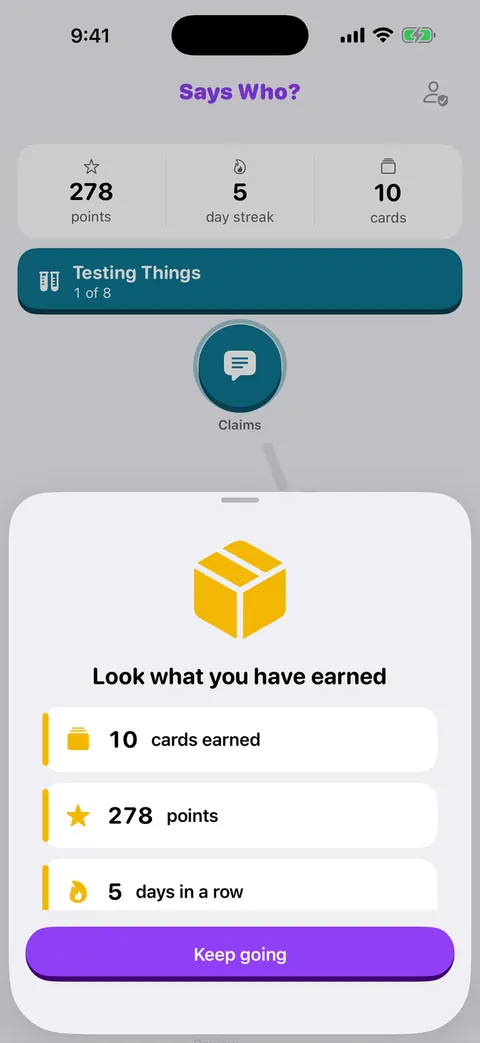
And when the path is finished, the game keeps going: endless rounds drawn from whatever your child is weakest on, and a gold crown for every round where most of their reasons held up.
No account, no sign-in, no analytics and nothing collected. Progress lives on the device and in the family's own iCloud, which Apple hosts and we cannot read. There is no server.
The third button
Next to "I'd believe it" and "I'd say that's wrong" there is a third answer: not enough to say yet. It is often the correct one. Most of what anybody hears is neither proved nor disproved, and knowing when you have not been given enough is the most useful skill in the app, and the least taught.
What it looks like
Reading
Why the reason is worth more than the answer
What a lucky guess actually teaches, and the one question to ask at dinner.
Naming the trick: how children get talked into things
Hurry, flattery, guilt, the dare. Pressure works until it has a name.